by Mendie N Jeremiah
As we navigate the “Give to Gain” theme for International Women’s Day 2026, a powerful call to intentional action that accelerates gender equality through economic empowerment, policy reform, and shared responsibility, I find myself reflecting deeply on what it truly means to be a man standing firmly on the side of justice. For the past eight years, I have walked this path not as someone “giving” rights to women, but as a man who recognises that every human being is born with inherent rights. No one should have to beg for them, and no one (regardless of gender) should have them trampled upon.
This is why I proudly identify as a feminist. Not the extreme version that some have twisted to paint men as enemies, but the one that demands equity, access, and dignity for women and girls while inviting men to rewrite the script alongside them. With most Nigerian Societies being largely patriarchal (with pockets of matriarchal communities), the real transformation begins when men and boys become active allies. This is the heart of the UN Women HeForShe initiative, a global solidarity movement launched to invite men and boys to stand with women, not as spectators but as partners in building a bolder, more equal world.
HeForShe is not a distant UN resolution on paper; it is a living call for men to disrupt harmful norms respectfully and practically. Through tools like the updated Barbershop Toolkit 2.0 and the Male Allyship Toolkit, it equips us to have real conversations in barbershops, workplaces, worship centres, and campuses – exactly the spaces where toxic expectations of “manhood” are enforced daily in Nigeria.
The Cost of Positive Masculinity in a Patriarchal Society
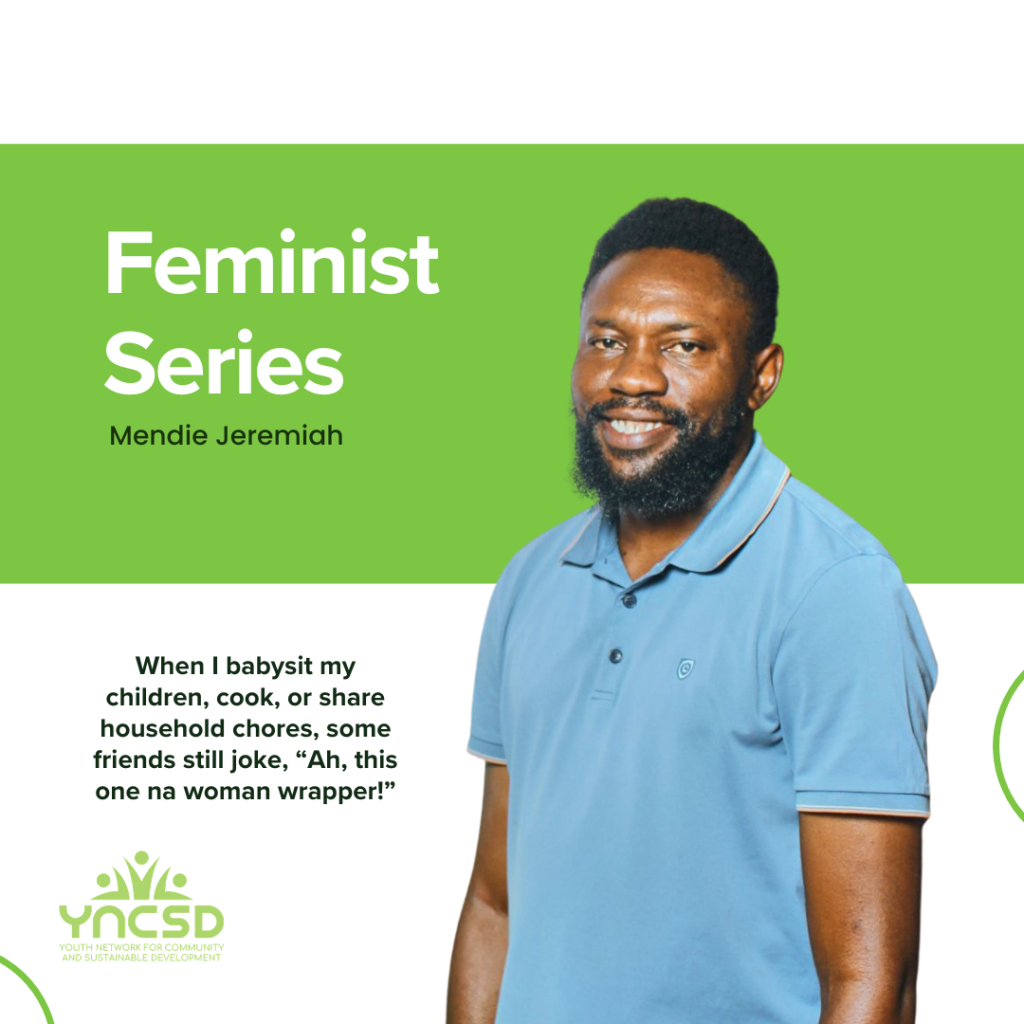
Let me speak from experience. In the Global South, especially Nigeria, stepping into healthy masculinity or positive masculinity often comes with labels. When I babysit my children, cook, or share household chores, some friends still joke, “Ah, this one na woman wrapper!”, meaning I am supposedly “answerable to a woman” and no longer “man enough.” When I express emotions openly or advocate against violence, the refrain is the same: “Forget that guy, he’s soft like a woman.”
These slurs are not harmless. They are the very chains that keep many good men silent. Yet I have chosen to break them because positive masculinity is not weakness; it is strength redefined. It is the courage to stand up in academic spaces, places of worship, hangouts with friends, and family gatherings and say: “This is wrong. Women and girls deserve better.”
It is also refusing to shift the blame. Instead of telling girls and women what to wear to avoid harassment, we must teach boys and men self-control and accountability. Sexual harassment is never about “indecent dressing” it is about power and choice. Before colonisation and imported dress codes, our ancestors wore animal skins or went bare-chested like the Benin Kingdom traditions, without it being an invitation to violence. Context matters. The right to expression in speech, dress, or lifestyle belongs to everyone. Positive masculinity demands that men respect that right instead of policing it.
Men as HeForShe Allies: From Ignorance to Action
In my years of fieldwork with men and boys across multiple communities, one truth stands out: many perpetrators do not even realise their actions constitute harassment or abuse. Catcalling, “harmless” touching, or “just joking” comments are often dismissed as fun, until we sit them down and draw the line. The moment they understand, many become allies overnight.
This is the power of HeForShe. When men speak up against sexual harassment, support the girl child’s education, challenge wife-beating in our communities, or share domestic responsibilities, we are not losing our manhood; rather, we are gaining a healthier society.
The Numbers Don’t Lie – Positive Masculinity Heals Everyone
The statistics are sobering. Globally, almost one in three women (30%) have experienced physical and/or sexual violence. In Nigeria, 13.2% of women aged 15–49 reported intimate partner violence in the past 12 months (2018 data), and in 2024 alone, an estimated 50,000 women and girls worldwide were killed by intimate partners or family members, that is 37 every single day. Africa bears one of the highest burdens.
Yet research from UN Women and partners shows that engaging men through positive masculinity works. Interventions that challenge harmful norms reduce violence against women and girls (VAWG), improve sexual and reproductive health behaviours among men, and foster equitable attitudes, especially in poor urban settlements in Nigeria, DRC, and Rwanda. When men become allies, families thrive, workplaces become safer, and entire communities gain. Positive masculinity also benefits men ourselves: it frees us from the prison of emotional suppression, reduces risky behaviours, and builds healthier mental and physical well-being.
UN Women Africa puts it perfectly: “Positive masculinity is a powerful tool in our collective journey towards gender justice. It calls on men and boys to reject harmful norms that equate manhood with dominance, aggression, or control. Instead, it promotes empathy, accountability, respect, and partnership.”
Rhetorical Questions for Reflection and Action
Under the Give to Gain banner, I leave us with these questions:
- Women and girls: Are you ready to open the door and accept men as genuine HeForShe allies instead of viewing every man with suspicion born of past pain?
- Men and boys: What “gift” of positive masculinity will you give today, in your home, workplace, worship centre, or among your friends, so that together we can gain a Nigeria free of violence against women and girls?
- All of us: If not us, who? If not now, when?
In this feminist series, my message is simple: Healthy masculinity is not the opposite of feminism; it is its strongest ally. When men stand up, speak out, and act responsibly, we do not lose anything. We all gain a safer, fairer, more prosperous society for our daughters, our sons, and ourselves.
Let us give the gift of positive masculinity. Let us gain gender equity.