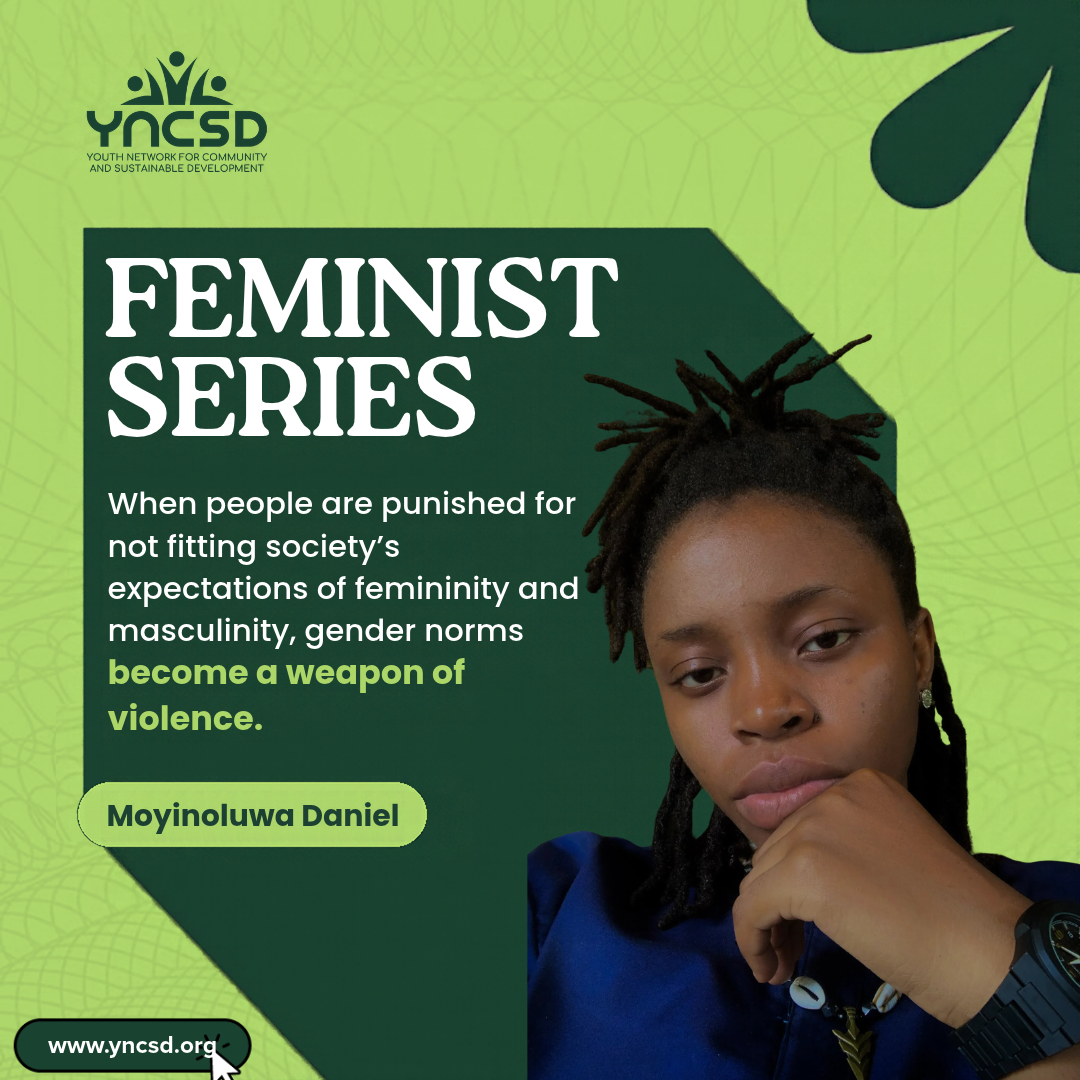
“You be man, abi you be woman?” (Are you a man or a woman)
If I had a naira for every time I have heard a version of this question, I would be a billionaire by now.
But this question is about more than curiosity. It reflects the expectations society places on how men and women should look, dress and behave, and what can happen when someone refuses to fit those expectations. From ridicule and harassment to physical assault and even death, enforcing gender norms can become a form of violence. This is a conversation we need to have, especially as the 16 Days of Activism Against Gender-Based Violence approaches.
Being a masculine-presenting person who is not a man in Nigeria comes with its own daily commentary. Sometimes, it is the double looks. Sometimes, it is people pointing and laughing. Sometimes, it is being insulted for “trying to be a man.” Several times, I have caught people staring intensely at my chest, apparently trying to figure out whether I am a man or a woman. I could be minding my business, walking down the road, and suddenly become the subject of someone else’s investigation.
I remember visiting an office some time ago to submit a letter. A female security officer stopped me and asked whether I was male or female. I said female because I simply wanted to get through peacefully and get on with my day. That should have been the end of it. But just as I was about to leave the post, she suddenly touched my chest without my consent, supposedly to “check.”
I keep thinking about how easily this kind of entitlement can cross the line. It brings me back to one question: why should the way a person dresses, speaks, walks or carries their body give anyone else the authority to question their dignity, let alone violate their body?
We must be willing to examine the rigid gender norms that fuel violence against people whose appearance or behaviour challenges what society considers acceptable. We see this in how masculine-presenting women are stared at, insulted, harassed and sometimes physically assaulted for not looking feminine enough. We see it in how women and girls who speak up, refuse to be submissive or challenge expectations of how a woman should behave are punished for stepping outside the roles assigned to them. Feminine-presenting men also face harassment, beatings and threats because others see their expression of femininity as something to mock or punish. In some cases, this hostility escalates into deadly violence.
The problem begins when these gender expectations become grounds for violence. When women are abused for being “too masculine,” when men are targeted for being “too feminine,” or when girls are punished for refusing to behave as society expects, we have to ask why conformity is treated as something others have the right to enforce through fear and violence.
We laugh at the jokes. We excuse the intrusive questions. We tell people to ignore the stares. We rarely stop to ask why someone’s gender expression should provoke such a strong reaction in the first place.
When someone believes another person deserves to be humiliated, controlled or punished for not conforming, that belief can fuel violence. When unwanted touching is excused as curiosity, harassment is dismissed as banter, or physical attacks are justified as a response to someone’s appearance, we are no longer talking about harmless opinions or actions. We are talking about violations of people’s safety and bodily autonomy.
This is why the conversation about gender-based violence must also address the policing of gender expression. We must recognise when scrutiny becomes harassment, when questioning becomes intimidation, and when the demand to conform becomes an excuse for violence.
In order to end gender-based violence, we must challenge the attitudes that make violence seem acceptable when its targets do not fit society’s expectations.
Nobody should have to defend their gender expression to deserve safety. And nobody should face humiliation, harassment, assault or death because someone else believes they have failed to be the man or woman society expects them to be.